
 German (DE)
  English (US)
  Spanish (ES)
  French (FR)
  Hindi (IN)
  Italian (IT)
  Russian (RU)
 U.S. President Donald Trump says President Vladimir Putin has agreed to temporarily halt the targeting of the Ukrainian capital and other towns as the region suffers under bitterly cold temperatures.
The Kremlin confirmed Friday it agreed to hold off striking Kyiv until Sunday, but refused to reveal any details, making it difficult for an independent assessment of whether the conciliatory step had indeed taken place.
In the past week, Russia has struck energy assets in the southern Ukrainian city of Odesa and in Kharkiv in the northeast. It also hit the Kyiv region on Wednesday, killing two people and injuring four.
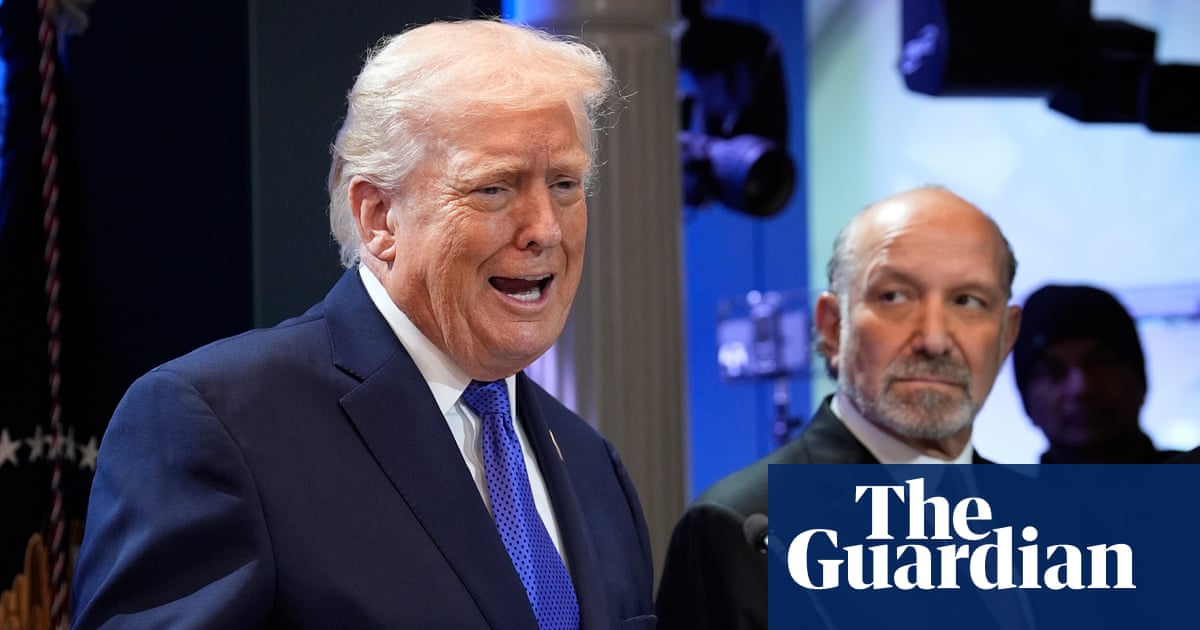
Trump said Thursday that Putin had agreed to the temporary pause amid the freezing temperatures that have brought widespread hardship to Ukrainians. “I personally asked President Putin not to fire on Kyiv and the cities and towns for a week during this ... extraordinary cold,” Trump said at the White House, adding that the Kremlin leader had agreed. Trump did not elaborate on when the request was made, and the White House didn’t immediately respond to a question seeking to clarify the scope and timing of any pause. The Kremlin said the supposed pause was aimed at creating “favorable conditions for negotiations.”
It's not the first attempt at a partial halt to Russia's brutal bombardment of Ukraine that ravaged the country's civilian infrastructure — leaving thousands without power or heat in winter — since Moscow's full-scale invasion on Feb. 24, 2022. Russia has effectively rejected a 30-day unconditional truce proposed by U.S. and Ukraine last year as a step to peace, but it has announced several short, unilateral ceasefires.
Here's a look at previous attempts:
Jan. 5, 2023
Putin orders a 36-hour ceasefire starting Jan. 6 to mark Orthodox Christmas. It was the first time he directed his troops to observe a ceasefire across Ukraine, even though Russian authorities had ordered limited, local truces for evacuating civilians or for other humanitarian reasons. Kyiv indicates that it wouldn't follow suit, and accuses Moscow of continuing attacks despite the self-declared truce.
March 11, 2025
Officials from Ukraine and the U.S. hold talks in Saudi Arabia. Kyiv says it is open to a 30-day ceasefire, subject to Kremlin agreement — something Trump has pushed for.
March 13, 2025
Putin effectively rejects the proposal, saying that Moscow agrees with it in principle but certain “issues” still need to be discussed.
March 18, 2025
Putin and Trump hold a long phone call and announce an agreement for Moscow and Kyiv to halt strikes against each other's energy infrastructure for 30 days. Russia and Ukraine subsequently repeatedly accuse each other of violations until the measure expires.
April 19, 2025
Putin announces a unilateral, 30-hour truce to mark Orthodox Easter, celebrated on April 20. Ukraine says it would reciprocate a genuine ceasefire but accuses Russia of attacks the next day. Moscow also accuses Kyiv of attacks during the supposed truce.
April 28, 2025
The Kremlin declares another unilateral ceasefire for 72 hours on May 8-10 to coincide with Russia’s celebrations of Victory Day, marking the end of World War II in Europe and attended by a number of foreign dignitaries. Both sides accuse each other of multiple attacks, with Kyiv calling the gesture “a farce.”











Comments