
 German (DE)
  English (US)
  Spanish (ES)
  French (FR)
  Hindi (IN)
  Italian (IT)
  Russian (RU)
 WASHINGTON (AP) — Democratic voters are showing up for this year's primaries in numbers not seen in decades, a pattern emerging across several states that has the party optimistic about its prospects in November when control of Congress will be at stake.
In Tuesday's primary, Wisconsin Democrats cast nearly 800,000 ballots, their highest total for a midterm in more than 20 years. That followed 1.5 million Democratic voters in Michigan the week before, a midterm record for the state.
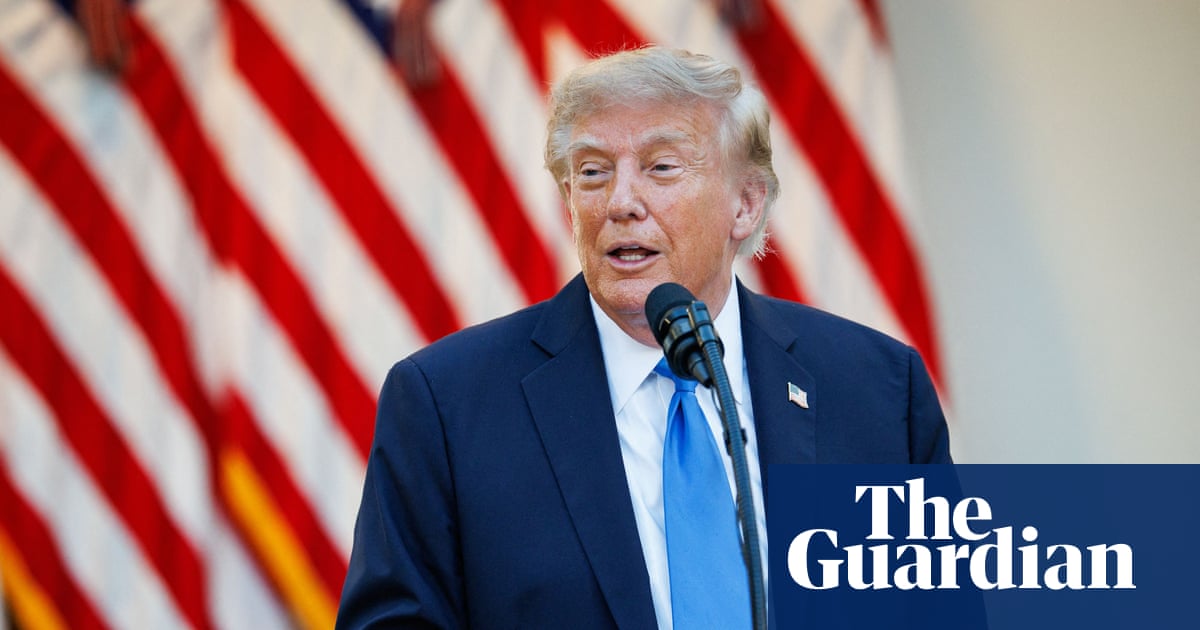
The enthusiasm extends beyond the Midwest. Democratic turnout also surged earlier this year in Texas and Georgia, states that will have competitive Senate races in the fall. It is giving Democrats a string of strong showings heading into the midterms, when the president's party is normally at a disadvantage. That is compounded this year by President Donald Trump's weak approval ratings, persistent inflation and an unpopular war with Iran.
"The big news is that Democrats are getting huge turnouts," said David Axelrod, who was a top adviser to Democratic President Barack Obama. "That's been a steady story throughout this period."
Competitive Democratic primaries have helped drive the surge, giving the party's voters more reason to participate. Republican primary turnout remained closer to historic norms in Michigan, even with a competitive statewide contest.
Voter turnout in primary elections is an imperfect predictor of general election results, especially when one party has the more compelling early contests. Republicans say they are responding with a major effort to turn out their voters in the fall.
GOP leaders say they can energize voters by tapping into a major fundraising advantage over Democrats and sending Trump back out campaigning, including during a midterm convention in Texas next month.
"Primary turnout doesn't win general elections," said Mike Marinella, spokesman for the National Republican Congressional Committee. "House Republicans are entering November with the money, momentum, stronger candidates and a battle-tested operation built to turn out voters when it actually counts."
Democratic turnout in some states is the highest in two decades
The scale of the Democratic turnout advantage varied across states, but the pattern extended across much of this year's competitive landscape for House, Senate or governor's races.
In Wisconsin, more than 790,000 people voted in the Democratic primary for governor, putting turnout at about 22% of registered voters. More than 1.5 million people voted in Michigan's recent Democratic Senate primary, which accounted for a little more than 18% of registered voters. It was the state's highest midterm turnout rate in a Democratic primary since at least 2002 — the same as in Wisconsin, according to an analysis of Associated Press election data.
In Minnesota, Democratic primary turnout was on par with the 2018 midterm election, with both years marking the state's highest Democratic primary turnout in a midterm year so far this century.
For Republicans in Wisconsin and Michigan, turnout in last week's primary was in line with previous GOP midterm primaries in each state. In Michigan, turnout for the Republican governor's race was about 11%. In Wisconsin's Republican primary for governor, it is expected to be about 14%.
"Republicans in Michigan will close the enthusiasm gap by highlighting the massive differences between our nominees and the extreme, out-of-touch politicians the Democrats have nominated," said Ted Goodman, a spokesperson for the Michigan GOP. "It's one thing to lead in enthusiasm before we know who is running. Now, the differences are clear."
Other states that held elections earlier this year also saw significant Democratic primary turnout. In Georgia and Texas, the midterm turnout rate in the Democratic primaries was higher than it's been since at least 2002. In Georgia, just over 1 million people voted in May in the Democratic governor's race, a little more than 13% of registered voters. In Texas, about 2.3 million people voted in March in the Democratic Senate primary, a little more than 12%.
Competitive primaries fueled turnout. They may complicate Democratic unity
The robust primary turnout has been a "good sign for Democrats," said Corwin Smidt, a political science professor at Michigan State University. But he cautioned that it is "not a very solid predictor" of how voters will break in November.
Smidt pointed to several factors behind the numbers, including high turnout in recent elections, which has created a larger pool of regular voters.
"Voting is a lot of habit-forming," he said.
He also noted that many of the states with high turnout had what he described as "media spotlight candidacies."
Michigan, Wisconsin and Minnesota all held marquee progressive versus moderate races in August that likely helped drive Democratic participation.
In Michigan, spending in the Democratic Senate primary topped $80 million, making it one of the most expensive races of the year so far, according to AdImpact. Progressive Abdul El-Sayed narrowly defeated Rep. Haley Stevens after a campaign that drew national attention and energized younger voters and university communities.
But Stevens carried Wayne County, the state's largest source of Democratic votes, and some of the congresswoman's supporters said before the primary that they would not back El-Sayed if he became the nominee.
In Wisconsin, the governor's primary was repeatedly reshaped as moderate Democrats left and reentered the race while democratic socialist Francesca Hong consolidated progressive support. Hong lost narrowly to Milwaukee County Executive David Crowley, a more moderate candidate.
The races highlight how competitive primaries helped drive attention and also how the winning candidates have work to do to bring their party together for November. Both Wisconsin and Michigan Democrats held unity breakfasts in the days after the primaries.
Sen. Bernie Sanders, a Vermont independent who backed El-Sayed and Minnesota Senate nominee Peggy Flanagan but did not endorse Hong, said in an interview this week that he expects Democratic voters to bridge their differences for the general election.
"At the end of the day, when it comes to taking on Trump and creating a Democratic House and a Democratic Senate, there is going to be unity, because I think everybody knows how important that is," he said.
A favorable environment, but a difficult map
Democrats have reason to believe the primary enthusiasm could last. The president's party has historically lost ground in midterm elections, and Trump enters the fall deeply unpopular amid economic unease and an unpopular war.
Some 33% of American adults approve of his job performance, according to the most recent polling by The AP-NORC Center for Public Affairs.
But a favorable national environment may not be enough. Democrats will need unusually strong turnout to overcome a congressional map that has become more favorable to Republicans.
The number of competitive House races has shrunk considerably this year after Republican-controlled states redrew congressional districts in their favor at Trump's urging. Some Democratic-controlled states responded, but the new lines are expected to produce a net benefit for Republicans, who hold a slim House majority.
Republicans control the Senate 53-47, with Democrats needing to pick up four seats to win the majority. Democrats will have to generate energy similar to Republicans two years ago, Smidt said.
"If we have a national tide like we had in 2024, suddenly that opens the map a little more," he said.
___
Pamela Jo Martin and Samuel Jens of The Associated Press Election Services team contributed to this report from Washington.







Comments