
 German (DE)
  English (US)
  Spanish (ES)
  French (FR)
  Hindi (IN)
  Italian (IT)
  Russian (RU)
  3 weeks ago
Nothing speaks more eloquently of the disempowering of the US Congress under Donald Trump’s second presidency than the brazenly audacious arrest of Venezuela’s leader, Nicolás Maduro and his wife, Cilia.
Far from recognizing it, Trump did not even acknowledge Congress’s right to know – keeping senior members in the dark until the operation to seize the strongman was under way.
Only after the operation to detain Maduro had begun did the administration bother to tell members of the congressional “gang of eight”: the top Republican and Democratic leaders of the Senate and House of Representatives, plus the chairs and ranking members of the intelligence committees of the two chambers.
That marks a conspicuous break with convention, even as previously observed by Trump himself. When Qassem Suleimani, the commander of the Iranian Revolutionary Guard’s Quds force was killed in a targeted strike during Trump’s first presidency in January 2020, the gang was punctiliously consulted, people involved in that operation have said.
In one fell swoop, the capture appeared to render the 1973 War Powers Resolution obsolete, if not an outright work of fiction.
The 1973 act – passed in the wake of the Vietnam war amid widespread anxieties about an incipient “imperial presidency” – requires a president to notify Congress within 48 hours of deploying troops into hostilities and withdraw them after 60 days, unless Congress authorizes the action or declares war.
It was a reaction to Lyndon Johnson’s perceived abuse of the notorious Tonkin Gulf Resolution of 1964, an ostensibly narrow measure that Johnson ultimately exploited to pursue unlimited war in Vietnam.
Yet long before the operation to seize Maduro, Trump had in effect communicated that he considered such congressional limits null and void by offering up a raft of alternative legal justifications – including executive orders declaring the Venezuelan leader and his henchmen “narco-terrorists” and thus potentially subject to similar precepts that governed the post-2001 “war on terror”.
Its effectiveness in constraining presidents from acts of war has long been shown to be limited, as the prolonged wars in Iraq and Afghanistan attest – although George W Bush received congressional authorization in both cases.
The 1989 invasion of Panama – carried out under the administration of George HW Bush to unseat the central American country’s dictatorial ruler, Manuel Noriega – was conducted without a former declaration of war or specific congressional approval. Bush, however, had taken care to garner bipartisan support on Capitol Hill beforehand.
Nor did Barack Obama seek specific prior congressional approval before the operation to kill Osama bin Laden in Pakistan in 2011, but instead acted under the authority of the Authorization for Use of Military Force (AUMF), passed by Congress after the 11 September 2001 al-Qaida terror attacks on New York and Washington.
Under Trump 2.0, no approval was sought for the mass military build-up off Venezuela’s shores or the estimated 35 lethal strikes on alleged drug-trafficking boats that have killed at least 115 people since last September. Similarly, the deployment of a vast military force off Venezuela, including the largest US aircraft carrier, was carried out without seeking authorization.
The disdain implicit in the explanations from Trump and Marco Rubio as to why information on the Maduro raid was withheld even from senior congressional figures – that they cannot be trusted because they might leak – is unmistakable.
“It’s just simply not the kind of mission you can call people and say: ‘Hey, we may do this at some point in the next 15 days,’” Rubio told reporters.
Stung by this haughty disregard, congressional Democrats hit out ferociously on Saturday, with insistent demands to be briefed on future actions.
“President Trump has made no secret of his intentions to effectively abolish the Congress, and that pattern continues today with his flagrant disregard for the Article 1 war powers of Congress, which is essential to our constitutional system of checks and balances,” said Nancy Pelosi, the former House speaker.
Mark Warner, the Democrat’s ranking member on the Senate’s intelligence select committee and a member of the gang of eight, said: “Our constitution places the gravest decisions about the use of military force in the hands of Congress for a reason. Using military force to enact regime change demands the closest scrutiny, precisely because the consequences do not end with the initial strike.”
And, Tim Kaine, a Democratic senator for Virginia who last month tabled a war powers resolution seeking to rein in the administration’s actions in Venezuela, said: “It is long past time for Congress to reassert its critical constitutional role in matters of war, peace, diplomacy and trade.”
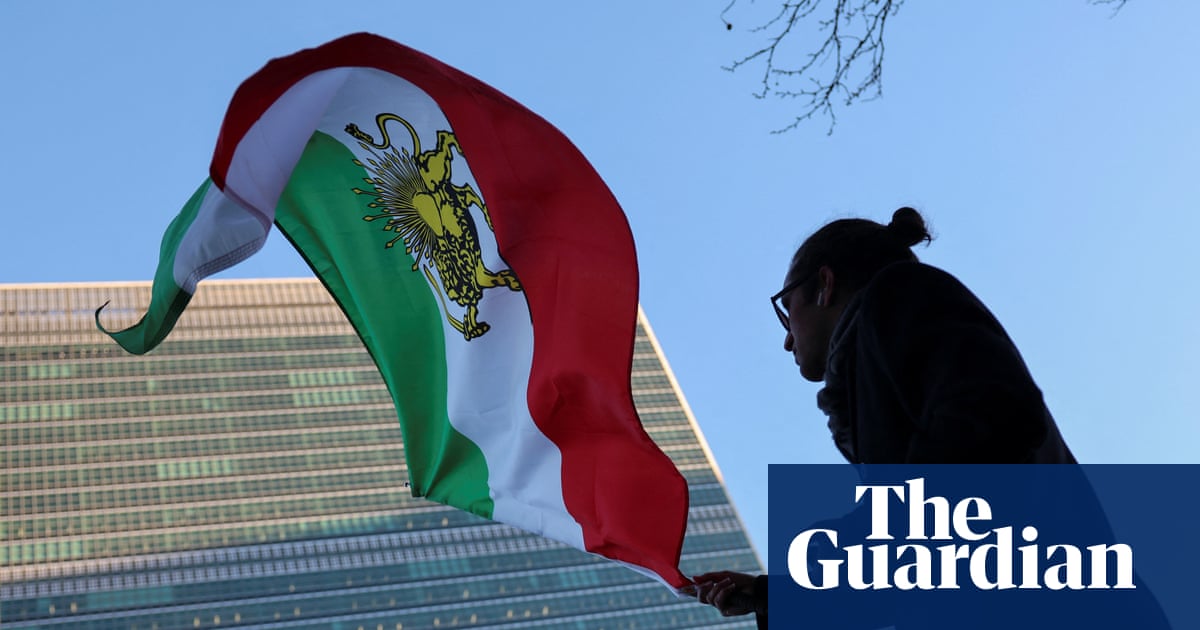
He added: “Where will this go next? Will the president deploy our troops to protect Iranian protesters? To enforce the fragile ceasefire in Gaza? To battle terrorists in Nigeria? To seize Greenland or the Panama canal? To suppress Americans peacefully assembling to protest his policies?”
Yet it is hard not to detect an air of impotent futility in the Democrats’ chorus of indignation.
With the exception of a few known Republican rebel figures such as Thomas Massie, a representative from Kentucky, Republican criticism was muted, whatever private misgivings some might have about Trump’s extravagant assumption of presidential powers at their expense.
Matt Duss, a former foreign policy adviser to Bernie Sanders, the leftwing Vermont senator, cited Mike Lee, a Republican senator from Utah, as an example of how far the party’s members in Congress have ceded ground to the president.
Having initially voiced reservations about the lack of authorization from Congress, Lee sharply changed tack – apparently after speaking to Rubio - saying that Maduro’s arrest was within “the president’s inherent authority under Article II of the Constitution to protect US personnel from an actual or imminent attack”.
Duss contrasted Lee’s supine stance with his previous actions, when he jointed Sanders to support a war powers resolution aimed at restricting US support for Saudi Arabia’s military intervention in Yemen during Trump’s first term.
“Senator Lee spoke very eloquently about the constitutional principles at stake, and that was just when the United States was only supporting the Saudi emirati war in Yemen,” said Duss. “So for him to come out now and say the president has inherent authority to invade a country and kidnap a foreign leader without any authorization from Congress, is just wild.
“It’s been clear for a while that he, along with many other Republicans, have decided that their political careers depend on staying in the good graces of Donald Trump and there’s really no past principle that they won’t abandon.”
Duss said the instruments available to Congress under the War Powers Resolution were no longer fit for purpose. He suggested that the legislation needed to be rewritten, in the manner of the national security powers reform bill, which Sanders introduced – ironically, along with Lee – during Trump’s first presidency.
The legislation was never enacted and even if reintroduced and passed would likely be vetoed by Trump – even if the Democrats were to recapture one or both chambers of Congress in November’s midterm elections.
Short of a foreign policy disaster in Venezuela that could produce a groundswell of Republican opinion that might then yield a Senate supermajority to override a presidential veto, such legislation’s only hope, Duss conceded, is the future election of a sympathetic Democratic president.
“That is a situation unfortunately that I think the framers of the constitution did not really anticipate,” he said. “Given that so many of the kind of separation of powers and the checks and balances presume that you’re going to have leaders who care about the law and who care about these processes.”













Comments