
 German (DE)
  English (US)
  Spanish (ES)
  French (FR)
  Hindi (IN)
  Italian (IT)
  Russian (RU)
  3 weeks ago

 BBC
BBC
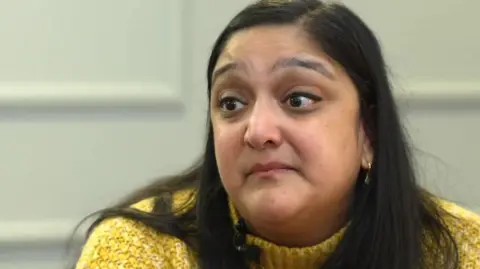
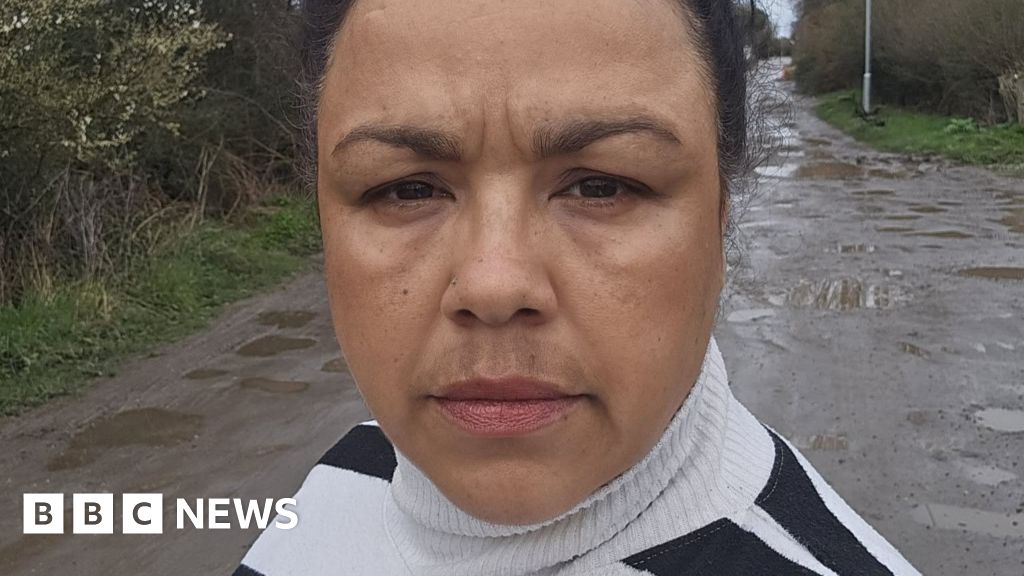
Sanju Pal fought to have her endometriosis recognised as a disability after being unfairly dismissed from her job
Sanju Pal was a high-flyer - ambitious and successful, she won the Asian Woman of Achievement Award, met the late Queen Elizabeth, had been invited to 10 Downing Street, and had a job as a management consultant with City firm Accenture.
None of that mattered when she missed her performance target in 2018 after taking time off for surgery to remove two large cysts on her ovaries.
"Suddenly it was taken away from me, and I became nothing.
"I wasn't a high performer anymore because I had a disability.
But last month the Londoner won a significant employment appeal tribunal that could affect how employers are allowed to treat employees with endometriosis.
These cells can get larger and change in response to hormones in the menstrual cycle, causing pain, inflammation and scar tissue.
Endometriosis is usually found on the lining of the pelvis and ovaries and can sometimes be found on the bowel or bladder or even outside of the pelvic area.
There is currently no cure, and treatment is limited to pain relief and sometimes surgery.
In Sanju's case, when she was diagnosed in 2017, her severe, deep endometriosis had become a Stage 3 endometrioma, with a fluid-filled cyst 7.5cm (3in) in diameter on her left ovary, and another, smaller cyst on her right ovary.
The cysts required an immediate operation and a period of recovery.
After being off work for a month, Sanju returned, but it was clear she had gone back too soon.
"I was in touch with HR, I was telling them how I was in pain, how I was struggling," she says.
"I was bleeding, I could barely walk, because I'd been pushing myself too much, pushing myself through the fatigue wanting to make senior manager."
At her six-month review, and after almost 10 years as a high-flyer in her job, she was told she would not make her performance target.
"I was then terminated and told to leave the building. I wasn't allowed to contact anyone," she recalls.
"I wasn't a high performer anymore, according to them, because I had a disability, because I was unwell and wasn't going to be contributing to the business in the way that I had been before."
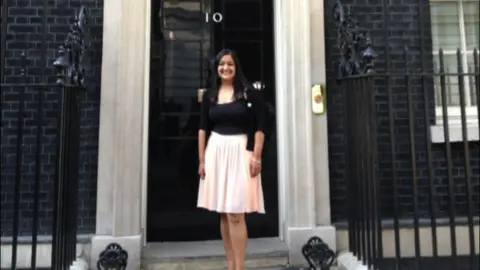 Sanju Pal
Sanju had been invited to 10 Downing Street, and won the Prime Minister's Points of Light Award for her charity RISE
Sanju says she felt deep shame over what had happened.
"I was so sad and shocked and anxious. I didn't feel like I could tell anyone. I literally became a shell of myself."
Sanju then lost an internal appeal, during which she disclosed further details of her condition. But the firm upheld its original decision that she could not have her job back.
In addition to losing her job, she had also lost her private medical insurance, at a crucial moment in her illness.
Sanju felt she had no choice but to go to an employment tribunal.
In 2022 the tribunal found in her favour but decided not to pay her compensation.
Sanju appealed, and in January 2026 the Employment Appeal Tribunal found the original tribunal had failed to take into account that she was a disabled person as a result of endometriosis and that she had been subject to discrimination because of her disability.
In a statement, Accenture told the BBC: "As this is an ongoing legal matter we cannot comment further at this time."
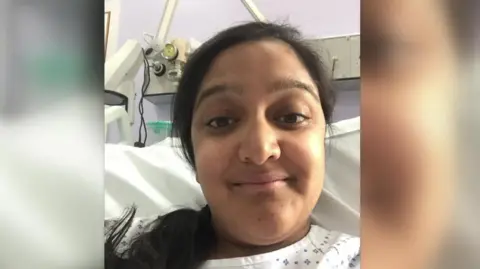 Sanju Pal
Sanju had an operation to remove two large endometriomas, or cysts, which meant she was off work for a month
Seven years and two employment tribunals later, Sanju says she is a changed person.
She still volunteers with the charity RISE, which she founded straight out of school and which connects young people in rural India with young people in London, a cause she has remained passionate about.
She still plays the violin in the West London Sinfonia and hosts a podcast.
But her business career has had to take a backseat while she fought for her endometriosis to be recognised as a disability.
"My heart goes out to anyone going through the employment tribunal system because it's not easy," she says.
However, since doing so and sharing her journey, she has found comfort in the cause.
She hopes that her case has now set the precedent for endometriosis to be recognised as a disability under the Equality Act 2010.
She plans to continue to campaign for a change in the law and to continue speaking out for women with endometriosis.
"The number of messages I receive from women saying 'I couldn't talk about this, I felt afraid to, but you're doing it'," she reflects.














Comments