
 German (DE)
  English (US)
  Spanish (ES)
  French (FR)
  Hindi (IN)
  Italian (IT)
  Russian (RU)
  3 weeks ago
Joshua NevettPolitical reporter

 PA Media
Education Secretary Bridget Phillipson is trying to build a consensus around the SEND reforms
School funding for special educational needs (SEND) should be increased and protected to meet the rise in demand for support, a group of MPs has said, as ministers consider major reforms.
The cross-party group of mostly Labour MPs called on the government to "align funding to need" and give schools "inflation-proofed" budgets in its plan to overhaul SEND provision in England.
The proposals are challenging for the government, which faces significant pressures from the rising costs of a SEND system, widely considered to be in crisis.
The Department for Education (DfE) said it was investing more in schools as it seeks to improve outcomes for children with special educational needs.
While the department said school funding is increasing by £1.7bn in 2026-27, budgets appear to be tight once rising SEND costs are taken into account.
The government has decided to pay SEND costs currently covered by councils from 2028, a move that is forecast to create a £6bn pressure.
In recent analysis, the Institute for Fiscal Studies said the government had three options for addressing this pressure: increase education funding, reforms to slow the growth of SEND spending, or cuts.
There is a risk of a backlash against reforms among parents and Labour MPs who are worried SEND support could be limited in some way.
Labour MP Neil Duncan-Jordan, who rebelled against the government's welfare reforms last year, said any changes to SEND provision had to be "driven by making the system better, not by saving money".
"We need buy-in from parents for this to work," the MP for Poole said.
"The last thing any government needs is an army of parents who are against them because they think they're making their lives worse."
Local authorities have a legal duty to meet the needs of eligible pupils but are struggling to afford the mounting costs of this as demand grows. More than 1.7 million children in England have special educational needs and the number has risen considerably in recent years.
Public spending on children with high needs has increased from £7.5bn in 2016 to £12bn in 2025, a real-terms rise of 66%.
A government policy paper that is expected to propose changes to SEND provision is due to be published in February, after being delayed.
The Department for Education launched a survey last year and the All-Party Parliamentary Group (APPG) on SEND submitted proposals, which have been seen by the BBC.
Ministers 'in listening mode'
In the submission, the group said: "Inflation has eroded the real value of core funding in schools and special places; restoring it and protecting early help budgets will underpin timely support."
The MPs also said national SEND policy "should align expectations and funding with the level of need settings are now asked to meet".
The APPG also called for more investment in early years and a national SEND workforce plan.
Anything perceived as cuts would alarm many involved in the APPG, a group that is keen to influence Education Secretary Bridget Phillipson as her department prepares the reforms.
In recent months, ministers have been meeting Labour MPs from the group to get their input and build support for the reforms, should they be voted on in Parliament.
Ministers have faced calls not to scrap education, health and care plans (EHCPs), which are legal documents guaranteeing bespoke support for pupils assessed as having high needs.
One MP said ministers are "in listening mode".
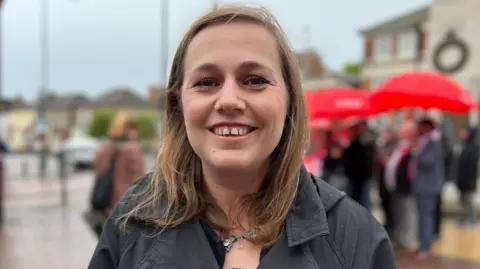
Labour MP Jen Craft said money is not being spent well in the SEND system
Labour MP Jen Craft, a vice-chair of the APPG who is the mother of a disabled daughter with an EHCP, recently met Phillipson to discuss SEND issues.
The MP for Thurrock said improving early intervention and making mainstream schools more inclusive could lead to a reduction in high-needs support and save money.
"The system is not necessarily focused on the needs of the children it is supposed to be there to help," Craft said. "There's an enormous amount of money in the system but it's not being spent well."
She has organised events to gather the views of pupils, parents and teachers on SEND provision in her Thurrock constituency.
In a report, she wrote: "The government should look closely at its plans for SEND funding, particularly the discrepancies between local authorities, the potential to ringfence budgets, and investment in early years to prevent children's needs escalating."
All parties in Westminster agree the SEND system in England needs reforming.
The Conservatives and the Green Party have not set out clear policies.
The Liberal Democrats have outlined five fundamental principles that should underpin the coming reform, including a "fair funding system" that incentivises schools to accept SEND pupils.
Reform UK is developing its own SEND policy and is expected to set out some of its ideas early this year.
"SEND needs reform not more money," Reform MP Richard Tice said. "It has had billions more in recent years and outcomes have not improved at all."
A DfE spokesperson said the government was spending £200m on giving all teachers SEND training and at least £3bn on creating 50,000 new specialist places.
The spokesperson said the SEND reforms "will be driven by our mission to improve outcomes for all children".
The department, the spokesperson added, was "laying the groundwork for an inclusive education system where children are supported at the earliest stage and can thrive in a school that meets their needs, close to home".




















Comments