
 German (DE)
  English (US)
  Spanish (ES)
  French (FR)
  Hindi (IN)
  Italian (IT)
  Russian (RU)
 A plane carrying captured Venezuelan leader Nicolás Maduro and his wife, Cilia Flores, has arrived in New York hours after an overnight US military attack that Donald Trump hailed as “an assault like people have not seen since world war two” as he vowed the US would run the leaderless country.
Trump, speaking at a press conference at his Mar-a-Lago residence in Palm Beach, Florida, on Saturday, provided few details after ousting Maduro in an audacious military attack but said the US would be in control of Venezuela until there is an orderly transition of power.
Maduro, in US custody hours after being seized from his Caracas compound in a US raid, landed at Stewart air national guard base after 4.30pm in a white Boeing 757. He is expected to be taken by helicopter to the city, where he will be processed and transported to the Metropolitan Detention Center prison, officials told NBC News.
They added the Venezuela president is set to appear in court by Monday evening.
But the dramatic intervention was condemned by Democrats on Capitol Hill and several leaders around the world as the most dangerous example of US imperialism since the invasion of Iraq in 2003.
Related: ‘It sends a horrible signal’: US politicians react to capture of Nicolás Maduro
Trump, who campaigned for the presidency with a promise end foreign wars, did nothing to quell those fears when he told reporters that the US would be temporarily seizing control of Venezuela and its oil infrastructure.
“We are going to run the country until such time as we can do a safe, proper and judicious transition,” the president said. “We can’t take a chance that somebody else takes over Venezuela that doesn’t have the good of the Venezuelan people in mind … We’re going to run it, essentially, until such time as a proper transition can take place.”
Maduro, a 63-year-old former bus driver handpicked by the dying Hugo Chávez to succeed him in 2013, has accused the US of seeking to take control of his nation’s oil reserves, the biggest in the world.
At his press conference, Trump said: “We’re going to have our very large US oil companies, the biggest anywhere in the world, go in, spend billions of dollars, fix the badly broken infrastructure, the oil infrastructure, and start making money for the country and we are ready to stage a second and much larger attack if we need to do so.”
It remained unclear how Trump plans to administer Venezuela. Despite the overnight operation that knocked out electricity in part of Caracas and captured Maduro in or near one of his safe houses, US forces have no control over the country itself, and Maduro’s government appears to still be in charge.
Trump said the US would run Venezuela “with a group” and would be “designating various people” in charge while pointing to the US secretary of state, Marco Rubio; the defense secretary, Pete Hegseth; and the joint chiefs of staff chair, Gen Dan “Razin” Caine, behind him.
He failed to elaborate but said he was open to the idea of sending US forces into Venezuela. “We’re not afraid of boots on the ground if we have to have. We had boots on the ground last night at a very high level, actually. We’re not afraid of it. We don’t mind saying it but we’re going to make sure that country is run properly. We’re not doing this in vain,” the president said.
A US occupation “won’t cost us a penny” because the US would be reimbursed from the “money coming out of the ground”, Trump said, referring to Venezuela’s oil reserves.
Related: Venezuela attack: what we know so far as US captures President Maduro
But the remarks are likely to cause consternation among some of Trump’s die-hard supporters who, haunted by the wars in Afghanistan and Iraq, have embraced his “America first” commitment to stop sending troops to fight and die abroad.
Trump also said Rubio had been in touch with the Venezuelan vice-president, Delcy Rodríguez. “We’ll do whatever you need,” Trump quoted Rodriguez as saying. “She really doesn’t have a choice,” he added.
But a few hours later, the president’s claim was undermined by Rodríguez, who, in a televised address, maintained the critical tone adopted by all members of Maduro’s cabinet since the first reports of the US bombardment.
She described the US attack as an “unprecedented military aggression”, and demanded the “immediate release” of Maduro and his wife. The Venezuelan people “are outraged by the illegal and illegitimate kidnapping of the president and the first lady”, Rodríguez said.
The Venezuelan vice-president insisted that the country “will never again be anyone’s colony – neither of old empires, nor of new empires, nor of empires in decline”.
She also echoed an argument repeatedly made by Maduro before his capture: that the real objective of the four-month-long US military pressure had never been a supposed “war on drugs”, but rather “regime change” and the “seizure of our energy, mineral and natural resources”.
At his earlier press conference earlier, Trump said he “understood she was just sworn in” as Venezuela’s new president. Rodríguez, however, repeatedly stressed that Maduro “is the only president of Venezuela. There is only one president in this country, and his name is Nicolás Maduro Moros.”
Maduro was indicted in US federal court in 2020 on narco-terrorism and other charges for running what prosecutors called a scheme to send tons of cocaine to the US through an alleged Cartel de los Soles. He has always denied the allegations.
In the run-up to the attack, Trump had sought a blockade of Venezuelan oil and expanded sanctions against the Maduro government, and staged more than two dozen strikes on vessels the US alleges were involved in trafficking drugs, killing more than 110 people.
At around 2am on Saturday, explosions rocked Caracas with blasts, aircraft and black smoke seen for about 90 minutes. The Venezuelan government said the attacks also took place in the states of Miranda, Aragua and La Guaira.
The operation involved a joint force of over 150 aircraft and special operations teams, and was executed without any US casualties or loss of equipment. The apprehension force arrived at Maduro’s compound and came under fire, replying with “overwhelming force”. Maduro was captured while attempting to reach a steel-reinforced safe room but was unable to close the door in time.
Maduro and his wife had been whisked by helicopters to the USS Iwo Jima, an amphibious assault ship in the Caribbean, before their transfer to New York. Trump posted a photo on social media appearing to show Maduro wearing a sweatsuit and blindfold on board the USS Iwo Jima. The couple arrived at the Stewart international airport in New Windsor, New York, late on Saturday afternoon.
Trump said: “The illegitimate dictator Maduro was the kingpin of a vast criminal network … responsible for the deaths of countless Americans. Maduro and his wife will soon face the full might of American justice and stand trial on American soil.”
The US has not made such a direct intervention in its backyard region since the invasion of Panama 36 years ago that, to the day, led to the surrender and seizure of leader Manuel Noriega over similar allegations.
Venezuela’s ruling “Chavismo” movement, named for Maduro’s revered predecessor Chávez, said civilians and military personnel died in Saturday’s strikes but did not give figures.
The opposition, headed by recent Nobel peace prize winner María Corina Machado, had no immediate comment but has said for 18 months that it won the 2024 election and has a democratic right to take power.
But Trump said Machado didn’t have the “support within or the respect within the country” when he was asked if she would be a potential interim leader now.
Saturday’s press conference in Florida struck a triumphalist tone. Pete Hegseth, the defense secretary, said: “Nicolás Maduro had his chance, just like Iran had their chance – until they didn’t and until he didn’t. He effed around and he found out.”
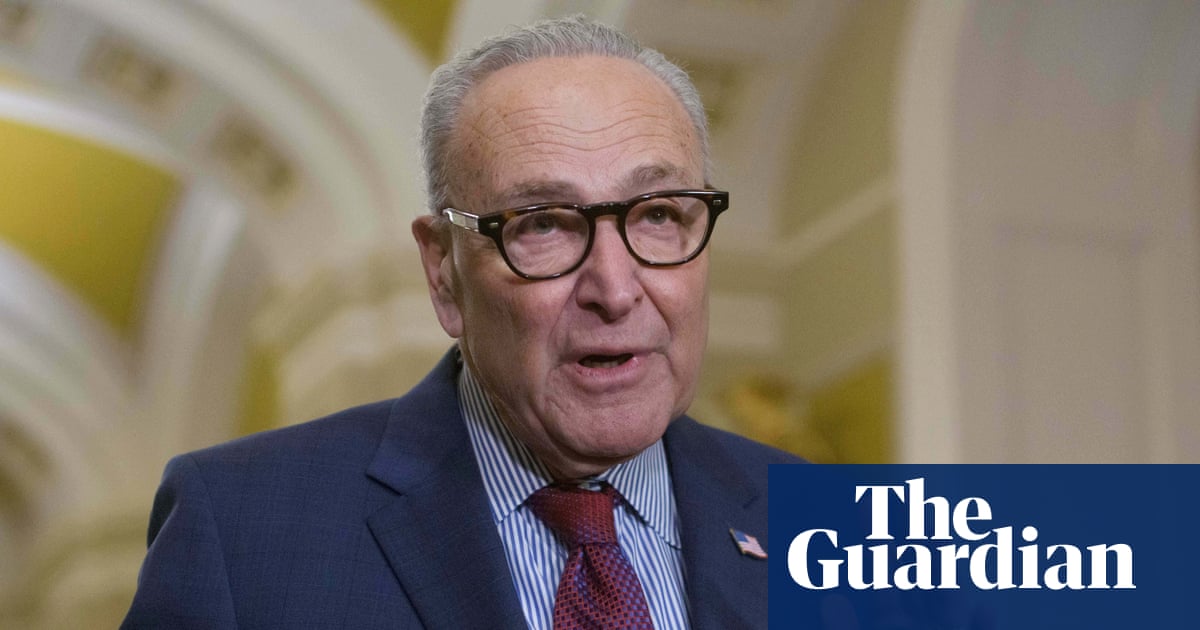
Rubio insisted that it had been impractical to inform Congress of such a delicate operation in advance. But Democrats roundly condemned the intervention. Chuck Schumer, the minority leader in the Senate, said: “The idea that Trump plans to now run Venezuela should strike fear in the hearts of all Americans. The American people have seen this before and paid the devastating price.”
Bernie Sanders, an independent senator for Vermont, said Trump and his administration “have spoken openly about controlling Venezuela’s oil reserves, the largest in the world. This is rank imperialism. It recalls the darkest chapters of US interventions in Latin America, which have left a terrible legacy. It will and should be condemned by the democratic world.”
Venezuelan allies Russia, Cuba and Iran were quick to criticize the strikes as a violation of sovereignty. Argentina’s president, Javier Milei, lauded Venezuela’s new “freedom”, while Mexico condemned the intervention and Brazil’s president Luiz Inácio Lula da Silva said it crossed “an unacceptable line”.











Comments