
 German (DE)
  English (US)
  Spanish (ES)
  French (FR)
  Hindi (IN)
  Italian (IT)
  Russian (RU)
  3 weeks ago

Writing during the carnage of the first world war, the iconoclast intellectual Randolph Bourne described the American revolutionary inheritance as a squalid marriage between the town capitalist and plantation patriarch. Glittering generalities of freedom and democracy, Bourne observed, were indelibly marked by their long captivity to the money counters and owners of human chattel.
In the land lorded over by the likes of Donald Trump, leader of one of the most indecently corrupt, violently inept administrations in the country’s history, the 250th anniversary of the American Declaration of Independence would seem to affirm this judgment. Our moment, defined by the mobilization of market frenzy, machineries of war, deportation deliriums and nativist passions, echoes Bourne’s; it is a time of social fracture, moral failure and hegemonic collapse, with cynical reason ascendant.
In the days ahead, the US origin story will be told again with fanfare and at great expense, dressed in the garb of Christian nationalism and gaudy militarism, but drained of its narrative power as a world-making event – the idea that “the cause of America”, in the words of Thomas Paine’s 1776 revolutionary pamphlet Common Sense, “is the cause of all mankind”. It is easy in the current context to forget that not long ago, this redemptive idea still resonated. On the night of his election to the presidency, Barack Obama framed his victory as an event that decisively narrowed the gap between the nation’s democratic ideals and its often flawed reality: “If there is anyone out there who still doubts that America is a place where all things are possible, who still wonders if the dream of our founders is alive in our time, who still questions the power of our democracy, tonight is your answer.”
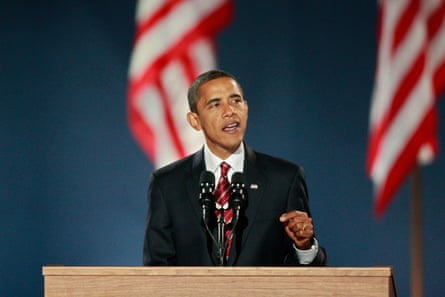
Celebrating ordinary people as the authors of “our better history”, Obama used his rhetorical gifts to trace a narrative arc – linking women’s suffrage to the New Deal, the civil rights movement and marriage equality, part of a continuous, unfinished march toward a “more perfect union”. The outlines of this American universalist narrative first emerged during the second world war, advancing upon claims to anti-fascism and anti-racism that gained sway even over conservative elites. During the post-second world war era, with anti-discrimination principles increasingly consecrated in law and culture, US history was defined as a series of emancipatory milestones that vindicated the domestic ruling order and US claims to global leadership.
Recent years have seen growing numbers of mainstream detractors from this consensus history – among the most prominent, the New York Times’s 1619 Project, which offered an account of a “new founding” adjacent to the one championed by civil rights liberals, but wildly traducing the original. The revolutionary war, its lead author Nikole Hannah-Jones argued, was primarily motivated by the tawdry desire to give a free hand to Bourne’s plantation patriarchs “in order to ensure that slavery would continue”.
Conservatives howled at this re-telling of the founding, and Jones’s claims received pushback from US historians, who long debated whether the country’s birth was best understood in terms of the heritage of slavery or anti-slavery. But generally glossed over – by both the 1619 Project and the ensuing debate over it – was the fact that land hunger, and westward expansion, was a major impetus of revolutionary energies.
In fact, emancipation and expansion are twin pillars of the American revolutionary narrative. Both are closely bound to the histories of slavery and freedom, mobile frontiers and the United States’ continental and global reach, and both have been variously used to support the idea of a democracy upholding opportunity and affluence for the majority of US citizens and residents. In the great muddle of the present moment, however, the idea of a virtuous expansionist-emancipatory dialectic has fallen on hard times, undone by growing wealth inequality, civil rights reversals, violent policing and unpopular wars of choice.
“What to the Slave is the Fourth of July?” asked the formerly enslaved Frederick Douglass on 4 July 1852, in a moment of similar contention and uncertainty. At that time, the recently passed Fugitive Slave Act meant that free states could no longer offer Douglass sanctuary against capture, rendition and return to slavery: “What have I, or those I represent, to do with your national independence? Are the great principles of political freedom and of natural justice, embodied in that Declaration of Independence, extended to us?” In 1857, just before the civil war, the US supreme court’s Dred Scott decision answered him, attempting to resolve any doubts about the constitutional meaning of slavery: Africans and their descendants could never be citizens, as they held no rights “which the white man was bound to respect”.
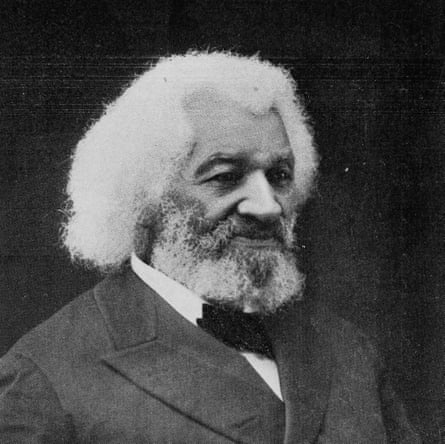
It took a bloody civil war to achieve a resoundingly affirmative answer to Douglass’s question, for slavery’s descendants. That it took another century for Black Americans to achieve substantive political and civil rights indicates ambivalence and backsliding that persist to this day.
Quibbles aside, what was most important about the 1619 Project was its demonstration that the established synthesis of nationalist and progressive history is broken. The meaning of the American founding and its relationship to the country’s present is now firmly up for grabs.

What does the Fourth of July mean?
Fourth of July celebrations have consistently invited Americans to ask, and in some cases re-litigate, fundamental questions about the political character of the country. The historical record of such celebrations suggests a propensity for evasion, rather than scrutiny.
The US centennial in 1876, at the end of the bitter Reconstruction period following the civil war, barely mentioned slavery, focusing instead on the US’s emerging industrial might and expansion across the continent and into the Pacific world. The Chicago World’s Fair that began on 4 July 1893, a time of racial segregation, anti-Black terror and imperial adventurism, affirmed this narrative. In a famous lecture to the American Historical Association, held in conjunction with the fair, historian Frederick Jackson Turner described movements across a series of western “frontiers” as the motor of force of the US’s democratic expansion in which “the slavery question” was but “an incident”, secondary to the geographic largesse that underwrote the creation of a free society of individual property holders.
The US’s entry into the second world war marked sustained historical reconsideration of the meaning of US independence and expansion. Popular histories like Arthur Schlesinger’s Pulitzer prize-winning book from 1945, The Age of Jackson, identified the first semi-centennial of 4 July 1826 – coincidentally the day both John Adams and Thomas Jefferson died – with the passing of the torch of the revolutionary generation to the movement led by Andrew Jackson. Although Jackson was popularly known as an “Indian killer” and was an enslaver himself, Schlesinger framed Jackson as a populist hero – comparing his extension of the franchise to white men without property to the working-class struggles of the New Deal era. In this line of thought, the real emancipatory kernel of the Declaration of Independence was empowering the “producing classes” against what Jefferson had called the “moneyed aristocracy”.
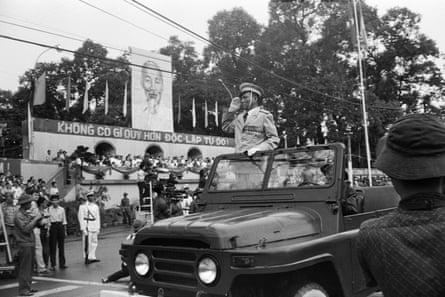
Not least among its ironies, this account of democratic expansion overlooked Jackson’s active suppression of struggles against slavery, avid support for Indian removal and hostility to women’s suffrage. Nevertheless, the idea that the Declaration of Independence was a mandate for insurgencies from below was far-reaching. The very year the book was published, in front of a crowd of several hundred thousand people in Hanoi, Ho Chi Minh marked the end of Japanese occupation and French rule in Vietnam, with the following words: “All men are created equal. They are endowed by their Creator with certain unalienable Rights; among these are Life, Liberty, and the pursuit of Happiness.” In a letter to the Truman administration sent the following year, he included a copy of the Declaration of Independence of the Democratic Republic of Vietnam, and called upon the United States to support Vietnamese self-determination. This letter, and several more letters and telegrams in subsequent years, were met with silence.
Coming at the end of the long, brutal US war in Vietnam, and a contentious civil rights era, the US’s 1976 bicentennial celebrations reverted to plantation nostalgia and commemorative kitsch. A tall-ship parade circumnavigated lower Manhattan, while a “freedom train” sponsored by Prudential, Pepsi and General Motors crisscrossed the continental United States loaded with artifacts of Americana: Martin Luther King’s clerical robes set alongside the gingham dress Judy Garland wore as Dorothy in the Wizard of Oz. Presidential candidate Jimmy Carter, a southern white progressive who supported Black civil rights and racial reconciliation, celebrated by riding in a horse-drawn carriage through an antebellum-themed village in Lumpkin, Georgia, designed in the 1960s to “preserve the Old South’s material and intangible cultures”. Meanwhile, Robert Williams, executive secretary of the New York chapter of the Sons of the Revolution, responded to critics who derided the celebrations as a corporate boondoggle: “There’s nothing wrong with making a buck. Free enterprise is the thing that has made this country gozowee.”
At the same time, in Philadelphia, a “July Fourth coalition” led by Black, Latino and Native American organizers staged a counter-celebration calling for a “bicentennial without colonies” and demanding “jobs and a decent standard of living”. But it is fair to say that the idea of America as an unfinished, let alone insurgent, emancipatory project languished. In New York City, a 30-year old developer named Donald Trump, embroiled in federal litigation over racial discrimination by his family’s real estate holding company, was just then bursting on the scene, soon to become the avatar of Randolph Bourne’s town capitalist. Shortly after, Ronald Reagan rose to the presidency with classic frontier-expansionist themes and cowboy bellicosity. Trump in turn was developing the sensibilities and intuitions that would make his own political and economic fortunes: a penchant for racist demagoguery about crime and social decay, and a warning that all was not well in the US’s gaudy supermarket with too many of its products made and sold by foreigners.
With Trump in the White House, it is easy to see that the big anniversary ahead will pass over the fact that the US’s revolutionaries instituted one of the world’s richest, most powerful slave societies, which their descendants overthrew. Showcased instead will be paeans to the pioneer spirit, military power and business civilization as the embodiment of the country’s perfect, flawless revolution, perhaps with a little plantation nostalgia on the side. Andrew Jackson’s plantation, the Hermitage in Tennessee, has planned a sweeping celebration featuring 1,776 US flags, while a newly restored Reconciliation Monument (formerly known as the Confederate Memorial) at Arlington national cemetery will provide a backdrop to official celebrations in Washington DC.
Jackson, the president Trump has often compared himself to, will be celebrated as empowering the common man against a corrupt elite. He will most certainly not be remembered for expanding the institution of slavery and authorizing Indian removal. As Ho Chi Minh, and other leaders in the global south who invoked the anti-colonial significance of the American revolution discovered, not every insurgency is created equal.

An inheritance waiting to be born
Published during Trump’s first administration, Greg Grandin’s recent Pulitzer prize-winning history, The End of the Myth, noted that what might be most distinctive about the current moment is the exhaustion of forward movement – not “the end of history”, but its foreclosure. Rather than finding new sources for expansion – moral or material – our American age is one of attrition and low expectations, small yards, high fences, new trade barriers, rising mid-life mortality, border walls and prison bars.
A sign of the new times: on day one of his second administration, Trump canceled, by executive order, the principle of birthright citizenship, enshrined by the 14th amendment and affirmed by late 19th-century legal precedents, for the children of unauthorized immigrants born in the United States. This was followed by other provocations: surging military-style immigration policing into US cities, and ramping up coercive diplomacy and targeted military action across the hemisphere, including threats to annex Canada and Greenland. Each of Trump’s gambits rests upon unsound and unpersuasive legal and moral reasoning. Nonetheless, the idea that citizenship rights can be revoked by executive order; that long-settled, mostly law-abiding residents can be hunted and detained; and that foreign territory can be seized by force consciously resurrects notorious – and, until recently, repudiated – precedents from the American past.
But while Trump has bucked precedent in countless ways, the reality of racial and colonial prerequisites to US citizenship was never definitively settled. At the turn of the 20th century, the so-called Insular cases determined that the inhabitants of newly acquired US territories in Puerto Rico, Guam and the Philippines did not automatically possess constitutional rights, establishing a situation of de facto colonial rule, which in many respects continues to this day. During the second world war, the court’s decision in Korematsu v United States held that Japanese people and their American born children could be classed as “enemy aliens” and incarcerated on national security grounds. It was only formally repudiated by the supreme court in 2018, and has many echoes in the president’s claimed authority to abrogate basic rights of citizens and residents on national security grounds.
Moreover, by bringing back an idea of territorial conquest, expelling unwanted denizens from the interior of the country, and embracing new frontiers of AI and finance-tech as a route to untold riches for the everyman, Trump 2.0 has again reasserted the frontier-expansionist myth over the vexing “woke” story of the United States’s unfinished emancipation. Why argue over questions of equality, when you can conjure “cat- and dog-eating” barbarians, rapists, criminals and terrorists committed to destroying western civilization?
In this, he is in good company. After all, Jefferson’s declaration was evasive on the question of slavery, but decisive when it came to what it described as “merciless Indian savages whose known rule of warfare is an undistinguished destruction of all ages, sexes and conditions.” Reflecting on US wars in Iraq and Afghanistan, philosopher king of the liberal hawks Paul Berman mused: “If you reject the Indian wars, you reject America.” James Madison himself argued that emancipation could not proceed without its expansionist twin: a society built on concentrated holdings of private property (including the enslaved) would invariably incite actual revolutionary passions. The solution was to “extend the sphere,” encouraging dreams of riches for ordinary people of modest means, and fears of dangerous outsiders.
The most convincing democratic alternative to this view was given to us by the US figure most closely associated with the idea of a “second founding” finally freed from the taint of both slavery and imperialism: Martin Luther King Jr. Even before he was taken by an assassin’s bullet, King had lost favor with the establishment for arguing that freedom as self-determination was not the exclusive property of Americans, and that the Vietnamese too had a righteous claim. Indeed, King was precise: “It is a sad fact that because of comfort, complacency, a morbid fear of communism and our proneness to adjust to injustice, the western nations that initiated so much of the revolutionary spirit of the modern world have now become the arch anti-revolutionaries.”
King observed something else that has since been mostly forgotten. American universalism was weak because it had been purchased “at bargain rates” – and often at someone else’s expense. The Black freedom struggle, in this sense, was about “more than the rights of Negroes”, as it revealed “systemic rather than superficial flaws” in US society. “Today, Black Americans have not life, liberty nor the privilege of pursuing happiness, and millions of poor white Americans are in economic bondage that is scarcely less oppressive,” King said.
In Trump’s second term, the expansionist pole of the American dialectic has instead returned with a vengeance, untethered from its worn-out emancipatory partner. “If you don’t believe in the Indian wars, you don’t believe in America,” could just as easily be a social media post from the Department of Homeland Security, or a slogan supporting Israel, a kind of US settler colony in miniature – as it seeks to further its own expansionist project in the Middle East.
The violence and corruption of the current era, however, lacks any legitimating or moralizing framework, and is unlikely to be laundered as easily as it was in 2008 if and when the Democrats return to power. In the eyes of the world, the US is no longer “the cause of all mankind”, but its scourge. Reanimating stalled pretensions to racial progress, or other such bargain basement promises, will not absolve the empire this time. The town capitalists and plantation patriarchs are in the saddle – while our revolutionary inheritance, Paine’s “universal struggle for liberty”, awaits its next reinvention.
-
Nikhil Pal Singh is the chair of the department of social and cultural analysis and professor of history at New York University













Comments