
 German (DE)
  English (US)
  Spanish (ES)
  French (FR)
  Hindi (IN)
  Italian (IT)
  Russian (RU)
  2 weeks ago
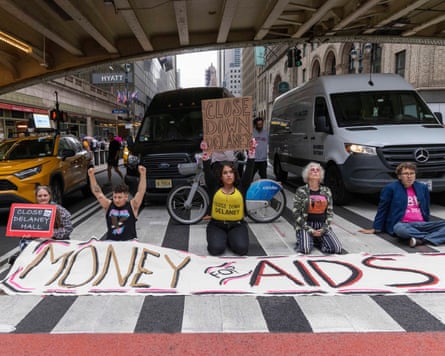
No part of the United States’ anti-HIV programme has escaped unscathed from Donald Trump’s funding cuts, despite pledges from the administration to protect care that saved lives around the world, a new report has found.
Funding cuts to the President’s Emergency Plan for Aids Relief (Pepfar) have caused “severe and devastating” disruption globally, with thousands of staff laid off and many clinics closed, according to research being presented next week at the 26th International Aids Conference in Rio de Janeiro, Brazil. It warns that changes in US policy risk reversing progress in the fight against HIV/Aids.
Organisations still in receipt of US funding are also changing what they do to comply with the Trump administration’s policies targeting diversity, equity and inclusion (DEI) initiatives, reproductive rights and the provision of gender-affirming care, researchers found.
Elise Lankiewicz, from the Aids research foundation Amfar and co-lead author of its Pepfar Pulse report, said: “Disruption was incredibly widespread. No part of the programme really escaped unscathed – and that includes areas of the programme that this administration intended to protect.”
Pepfar is credited with saving more than 26 million lives and changing the trajectory of the HIV epidemic since it was set up in 2003 during George W Bush’s presidency.
It works through partner organisations around the world, who find people at risk and offer them testing for HIV, protection against the virus, such as condoms or medicines, and treatment if needed.
However, many of its grants were abruptly withdrawn by the Trump administration in 2025 – more than half had been managed via USAID, the agency dissolved by Trump in July 2025. A waiver that was issued months before, in February 2025, theoretically allowed programmes providing life-saving treatment or preventing mother-to-child HIV transmission to continue.
“The reality is it’s incredibly hard to cut one award without there being ripple effects throughout the system,” said Lankiewicz.
Amfar surveyed 166 organisations across 46 countries that had been due to receive Pepfar funding in 2025. More than half of the respondents had at least one terminated award, resulting in more than 1,700 closed clinics, drop-in centres or other sites. Prevention services were particularly hard hit. More than 16,000 full-time staff lost their jobs.
Almost two-thirds of organisations providing services to prevent mother-to-child HIV transmission reported disruption, with a fifth ending services entirely. A fifth of organisations providing HIV care and treatment stopped at least one service, the researchers found. Many said they were unable to obtain supplies of laboratory commodities, condoms or drugs.
Five surveyed organisations had closed; three as a direct result of losing Pepfar funding. However, the researchers said: “This is likely a significant under-count, since closed organisations would no longer have active email accounts by which to receive the survey.”
Services for the key populations of people most vulnerable to HIV – such as gay or transgender people, injectable drug users or sex workers – were most likely to have ended.
Almost four out of five respondents said they had been asked to restrict their work to comply with an additional US policy – typically anti-DEI executive orders, but also an expanded “global gag rule”, said Lankiewicz.
“They made pretty dramatic shifts to their programming to align with these new policies,” she said, adding that this included ending services tailored to specific people such as sex workers, as well as support for victims of gender-based violence.
Greg Millett, a member of the study team, said: “Until now, much of the discussion about the impact of recent Pepfar disruptions has relied on projections and modelling. This study provides some of the first real-world data.”
The results mirror earlier analysis of US government data, which showed a severe drop in numbers of frontline health workers, HIV diagnoses and prevention programmes.
“These disruptions threaten to reverse progress toward controlling the HIV epidemic,” Millett told a press briefing ahead of the Aids 2026 conference, which is organised by the International Aids Society.








Comments