
 German (DE)
 English (US)
 Spanish (ES)
 French (FR)
 Hindi (IN)
 Italian (IT)
 Russian (RU)
 43 minutes ago
The Democrats’ midterm “blue wave” wins gave them strong majorities in both chambers of Congress, new governors’ mansions and power in some unexpected places. Voters dealt a stunning rebuke to Donald Trump – and his ruthless deportation campaign and violent ICE raids across the country were among the key issues that cost Republicans support. But what will Democrats do about the immigration crackdown?
Can congressional Democrats rein in ICE?

The US Congress theoretically has the ability to force many changes on ICE through legislation, such as taking away funds, restricting detention centers and mandating a focus on migrants with violent records – after Trump’s pledges to target “the worst of the worst” actually turned into mass arrests of people without criminal records and even of people with legal papers.
Democrats have said such things as, “We have to rein ICE in because its illegal, out-of-control activities [have] killed individuals … assaulted individuals… incarcerated individuals” (Mississippi Representative Bennie Thompson, likely to chair the House homeland security committee), and “We will rip ICE apart” (incoming US Senator of Minnesota Peggy Flanagan).
But even with House and Senate majorities, enacting legislation will face steep odds without Republicans on board, considering presidential veto power and the Senate filibuster, which requires at least 60 votes to move bills forward.
And not everyone in the Democratic caucus is on the same page. Leaders are initially proposing more modest guardrails, banning masks for ICE officers and requiring body-worn cameras in the field.
In practice, one of the clearest unilateral powers Democrats will have next year is that of greater oversight, conducting investigations to expose the faults of the Trump administration’s immigration policy.
What could oversight look like?

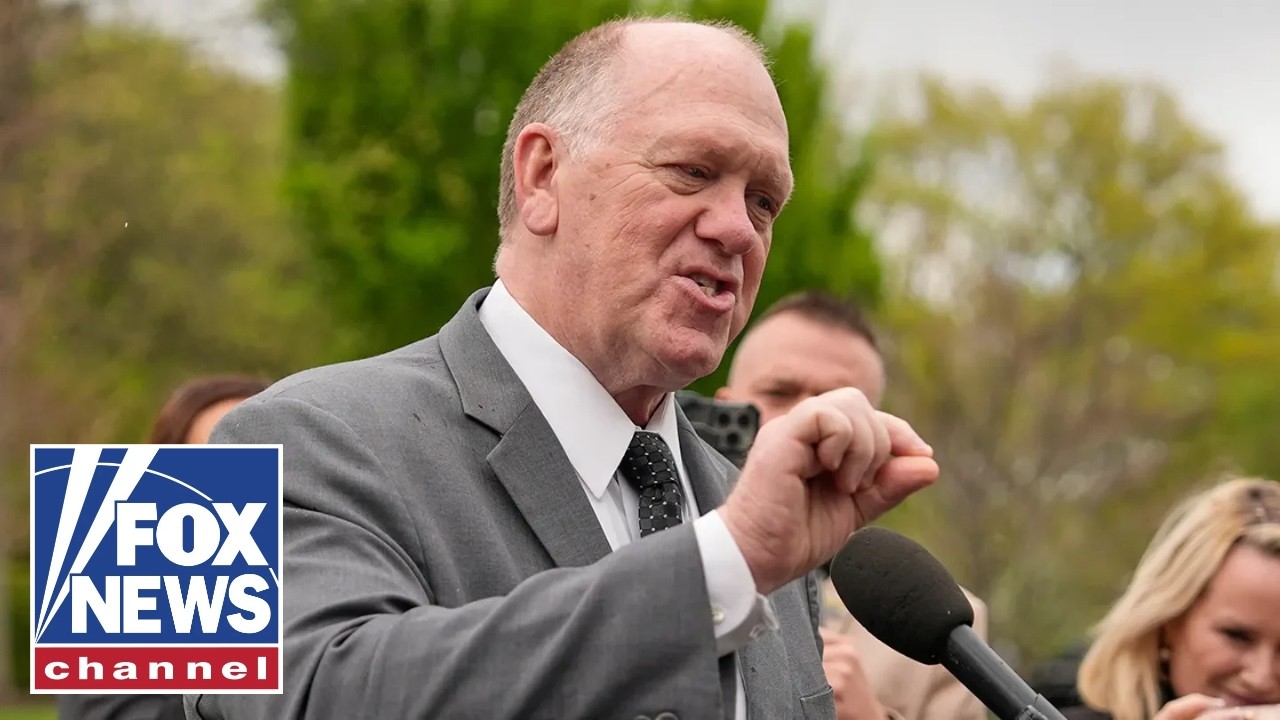
Democratic-led congressional committees will be able to issue subpoenas, and they already plan to call in homeland security secretary Markwayne Mullin, new White House chief of staff Stephen Miller, border czar Tom Homan and former border patrol commander-at-large Gregory Bovino for questioning in public.
They may also hold hearings in cities where they can present evidence of agency misconduct, while continuing congressional visits to ICE detention facilities to check on conditions there and increase public exposure.
Meanwhile, they could consider impeachment. It is unclear whether the US constitution allows for someone like Miller, as chief of staff, to be impeached. But if Democrats lead a second attempt to impeach defense secretary Pete Hegseth – and especially if they succeed in removing him from office – it could curtail Miller’s authority by putting other impeachable officials directing immigration enforcement, such as Mullin, on notice that they could lose their jobs if they follow any White House advice to act lawlessly.
What new laws or reforms could Democrats realistically pass?
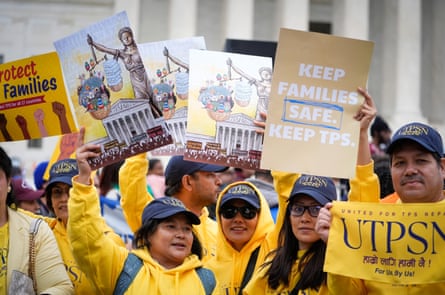
Democrats, both sitting and incoming, are now pushing for comprehensive immigration changes to a system that both parties have long agreed is “broken”, but Congress has not had the will to reform top to tail, balancing security measures at the US-Mexico border with helping immigrants already in the US.
Sufficient bipartisan unity is hard to come by. Republicans largely oppose what they call “amnesty” – giving people in the country unlawfully the chance to legalize their status. Some progressive Democrats, meanwhile, denounce crackdowns on the border and restrictions on seeking asylum that contradict international law.
Yet more targeted fixes may be on the table. Some 81% of Americans endorse a citizenship pathway for undocumented immigrants who came to the US as children, also known as “Dreamers”, according to a recent Gallup poll. Even the Trump administration has indicated renewed openness to this idea since the midterm drubbing.
Lawmakers may be able to get agreement to reinstate temporary protected status (TPS), a program allowing work permits and protection from deportation for nationalities in the US who are unable to safely return to their home countries, especially for Haitians and Afghans. The administration has ended TPS for roughly a million people across more than a dozen nationalities.
Legislation could even create a pathway to a green card for TPS holders, something that does not exist now.
However, once again, with Trump threatening to become “Mr Veto” it’s unclear how he and Senate Republicans will proceed.
What about the high levels of DHS funding?
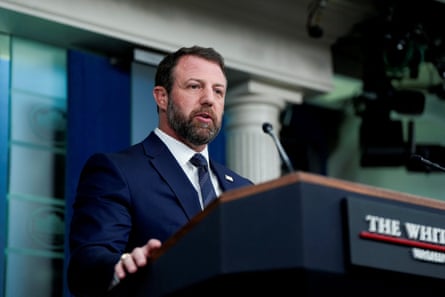
DHS, which oversees immigration enforcement and many immigration benefits in the US, has received about a quarter of a trillion dollars in funding during Trump’s second term alone. Taxpayers’ money designated for ICE soared and it is now the highest federally-funded US law enforcement agency.
That includes a roughly $70bn cash infusion in June, meant to bankroll the department through the end of Trump’s presidency. Democrats say they plan to make efforts to claw back or withhold at least some of that funding through legislation once they control Congress.
Some Democrats want to abolish ICE – how likely is that to happen?

Very unlikely. The slogan “abolish ICE” became a political liability for Democrats as Americans turned on undocumented immigrants when unauthorized border crossings rose sharply under the Biden administration and Trump and his Maga white nationalist ranks started calling them an “invasion”. Even to many mainstream US voters the notion that you should entirely abolish ICE – like defunding the police – stood for the left being too soft on law and order.
Despite the backlash that Republicans are now feeling given the perceived cruelty of Trump’s mass deportation campaign and ICE violence on the streets, an ideological divide among progressive and more moderate Democrats would probably preclude closing down the agency.
The re-elected centrist Democratic congressman Henry Cuellar, representing a Texas-Mexico border district, last Wednesday said simply: “I’m not going to abolish ICE.”
What about the Democrats who won big at state and local level?

Although immigration enforcement is broadly a federal responsibility, state and local governments have been deeply involved in recent years – especially through cooperation between police and sheriffs’ departments and ICE, whether because of what’s called 287(g) agreements or other collaborative policies.
Texas, in particular, saw a political earthquake, where Democrats flipped a US Senate seat, the governorship, the attorney general’s office and the state House of Representatives.
This followed decades of Republican dominance statewide and increasingly draconian immigration enforcement. Texas’s laws and policies have required local law enforcement to work with ICE and state penalties have criminalized people who unlawfully crossed the border with Mexico.
Leadership in states that swung heavily blue now have the opportunity to back off such aggressive tactics, likely leading to fewer ICE arrests, less depletion of immigrant-heavy workforces, and the potential for communities to rebuild trust with local law enforcement.
Democrats are now set to hold all 10 of the House seats along the almost 3,000 miles of the US-Mexico border and the four border governorships – California, Arizona, New Mexico and Texas – for the first time since 1979, as well as four states’ top legal offices. Hard-right Texas governor Greg Abbott, for example, outgoing after 12 years, unilaterally bussed migrants to Democratic-led cities and spent an estimated $11bn militarizing the Tex-Mex border with the extreme project, “Operation Lone Star”. Now Democrats will examine what they can and wish to unwind.
How else could Democratic state and local officials respond?

Democratic state leaders could help reinstate policies that help immigrants, such as access to in-state college tuition for undocumented students, after those were gutted in some states amid federal collusion in Trump’s second term.
They could also join lawsuits challenging Trump-era policies, and cities, counties and states that are suddenly on the same side of the political debate could pool resources to fight legal battles against the federal government instead of against each other.
The label “sanctuary city” has somewhat gone out of vogue in recent years. But in a similar vein, Democratic city and county leaders, as well as state legislatures, may devise new laws and strategies to block cooperation with ICE, at least when it comes to immigrants who do not pose a public safety risk.
What other changes are we most likely to see?

For federal congressional seats that have flipped in favor of Democrats, immigrants may discover a new ally. Congressional offices often help their constituents – including noncitizens – contact federal agencies, get answers from the government and sometimes find solutions. That can mean finally receiving a work permit stuck in limbo, helping a family member overseas with their visa processing or getting a loved one out of detention.
Ultimately, the president and his subordinates have given no signs that policies will be easing - and they plan to continue deportations.
Despite Trump telling 60 Minutes after the midterm losses that maybe immigration enforcement was “too tough”, he appointed the ferociously anti-immigration zealot and longtime ally Miller as his chief of staff shortly after that interview was recorded.
While Democrats can shine a spotlight on excesses and racist attitudes and act as a buffer, more transformational change will probably have to wait to see if a Democrat – particularly a progressive – wins the White House in 2028.















Comments