
 German (DE)
  English (US)
  Spanish (ES)
  French (FR)
  Hindi (IN)
  Italian (IT)
  Russian (RU)
  3 weeks ago
The intensively discussed files into the disgraced former financier and sex trafficker Jeffrey Epstein seem almost certain to pass a significant milestone on Tuesday when representatives on Capitol Hill consider their fate in a vote that long seemed uncertain to take place.
After months of deliberate delays and manoeuvres, the House of Representatives will vote on the Epstein Files Transparency Act, legislation which would, if enacted, require the justice department to release all unclassified materials on Epstein, who died in jail in 2019 while awaiting trial on sex-trafficking charges.
An emphatic vote in favor seems inevitable after Donald Trump on Sunday reversed himself and called for the release of the files, declaring “we have nothing to hide” and labelling the controversy over the files a “Democrat hoax”.
Trump’s volte-face followed the failure of intense White House efforts to persuade two female Republican members of Congress, Lauren Boebert and Nancy Mace, to withdraw their names from a discharge petition to force the House speaker, Mike Johnson, to hold a floor vote on releasing the files.
Faced with the prospect of numerous Republican defying his wishes by voting with Democrats in favor of releasing the files, the president decided to cut his losses by bowing to the inevitable.
His greenlight is expected to free even more GOP representatives of their previous inhibitions against joining all 214 House Democrats, raising the prospect of an overwhelming vote in favor of release.
Would the passage of the bill in the House mean the files finally see the light of day?
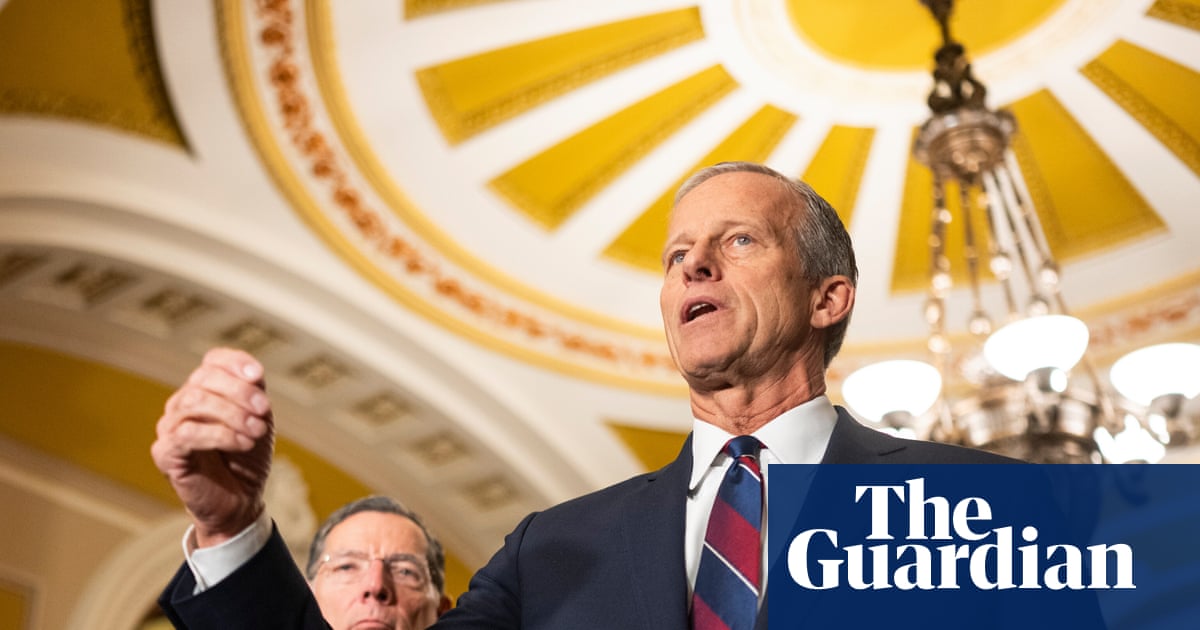
Not yet. The bill then has to go before the Senate, where the Republican majority leader, John Thune, has not committed to holding a vote.
What is the Senate expected to do?
It is unclear. John Barrasso, the Republican majority whip, has promised to “take a look” at the bill if it passes the House. But there are no guarantees and partisan politics may intervene, despite GOP members’ stated desire to reflect the will of their constituents, who, polls suggest, overwhelmingly favor making the files public.
Barrosso told NBC’s Meet The Press on Sunday that he considered the Democrats more interested in turning Trump into “a lame duck president” than achieving “accountability and transparency”.
But an overwhelming House vote in favor could make it morally difficult for the Senate to refuse to stage a vote.
Would that result in the Senate passing the bill?
It is far from inevitable. Sixty out of the chamber’s 100 senators would need to back it, to overcome the Senate’s filibuster rule.
Assuming all 47 Senate Democrats all vote in favor, 13 Republicans would be needed to assure passage.
Would Trump then sign it?
Trump told reporters on Monday that he would sign the bill if arrives on his desk. Yet despite this pledge and his late U-turn on releasing the files, Trump could still use his presidential veto power to block passage – though doing so at such a late stage would surely fan suspicions that he has something to hide.
Could such a veto be overcome?
Yes. A presidential veto can be overridden if both chambers back it by a two-thirds majority. Given the strength of feeling surrounding the Epstein affair, that seems within the bounds of possibility. But it remains a significant barrier.
What cards can Trump play if overwhelming congressional votes compel the justice department to make the files public?
Even if Trump signs the bill – whether under his own volition or by force because House and Senate majorities override his veto – his recent announcement of a justice department investigation into prominent figures (other than himself) mentioned in last week’s trove of Epstein emails released by the House oversight committee have fueled fears that any version of the files released could be incomplete or selective.
Last Friday, Trump instructed the US attorney general, Pam Bondi, to open an investigation into links between Epstein and former president Bill Clinton, Larry Summers, a former US treasury secretary and ex-president of Harvard University, Reid Hoffman, a venture capitalist noted for funding Democrats and liberal causes, and the bank JPMorgan Chase. The investigation could enable the justice department to withhold certain documents on the argument that releasing them would be prejudicial.
In the final analysis, Trump could end all uncertainty by ordering the files to be released now regardless of what Congress decides.







Comments