
 German (DE)
  English (US)
  Spanish (ES)
  French (FR)
  Hindi (IN)
  Italian (IT)
  Russian (RU)
  3 weeks ago
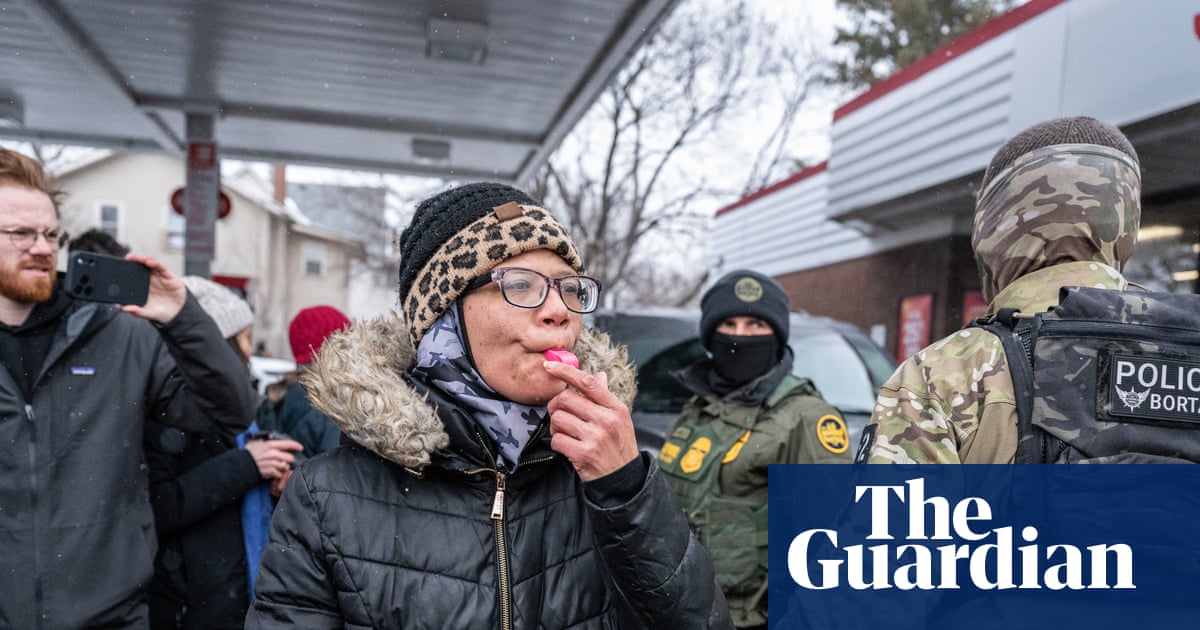
Tens of millions of Americans have now seen video of the killings of Renee Good and Alex Pretti at the hands of federal agents in Minneapolis. The activities organized in response have not been initiated by outside agitators or left-wing zealots, but, rather, by everyday Americans protesting the tactics of federal agents in that city.
These community members are communicating over encrypted messaging apps such as Signal and using their cellphones to record Immigration and Customs Enforcement and Border Patrol officers. Some have been using apps such as ICEBlock to help monitor ICE activities. They are using 3D printers to mass-produce whistles for community members to blow to alert each other when federal agents are in the area.
While the technology in some of these instances is new, this pattern – grassroots activists using the latest technology literally at their fingertips – is older than the republic itself. As a legal scholar who has studied American social movements and their relationship to technology, I see that what regular Americans in Minneapolis are doing is part of a very American tradition: building on trusted interpersonal relationships by harnessing the most recent technology to supercharge their organizing.

From Colonial era to the Civil Rights Movement
As the first stirrings of the American revolutionary spirit emerged in the 1770s, leaders formed the committees of correspondence to coordinate among the Colonies and in 1774 formed the Continental Congress. They harnessed the power of the printing press to promote tracts such as Thomas Paine’s Common Sense. One of the first acts of the new Congress was to create what it called the Constitutional Post, a mail system from the Maine territories to Georgia that enabled the colonists to communicate safely, out of reach of loyalist postmasters.
And the date Americans will be celebrating in 2026 as the 250th anniversary of the United States, July 4, commemorates when the drafters of the Declaration of Independence sent the final document to John Dunlap, rebel printer. In other words, what we celebrate as the birth of our nation is when the founders pressed “send.”
In the 1830s, as the battle over slavery in the new nation began to emerge, a new type of printing press, one powered by steam, helped supercharge the abolitionist movement. It could print antislavery broadsides much more rapidly and cheaply than manual presses.
The introduction of the telegraph in 1848 helped launch the women’s rights movement, spreading word of its convention in Seneca Falls, New York, while similar meetings had not quite caught the public’s imagination.
Fast-forward over 100 years in U.S. history to the Civil Rights Movement. Leaders of that movement embraced and harnessed the power of a new technology – television – and worked to create opportunities for broadcast media to beam images of authorities attacking young people in Birmingham, Alabama, and marchers on the Edmund Pettus Bridge outside Selma, Alabama, into living rooms across the United States. The images galvanized support for legislation such as the Civil Rights Act and the Voting Rights Act.
Social movements today
Today, new technologies and capabilities such as the smartphone and social media are making it easier for activists – and even those who have never seen themselves as activists – to get involved and help their neighbors. But it’s important not to mistake the method of communication for a movement. Indeed, without people behind the smartphones or as members of a group chat, there is no movement.
And what is happening in Minneapolis and in places across the country is still people organizing. Mutual aid networks are sprouting up nearly everywhere that immigration enforcement agents are amassed to carry out the Trump administration’s deportation policies, helped but not supplanted by technology. These technologies are important tools to support and catalyze the on-the-ground work.
It’s also important for advocates and would-be advocates to know the limits of such technologies and the risks that they can pose. These tools can sap a movement of energy, such as when someone posts a meme or “likes” a message on a social media platform and thinks they have done their part to support a grassroots effort.
There are also risks with any of these digital technologies, something the founders realized when they created their independent postal system. That is, use of these tools can also facilitate surveillance, expose networks to disruption and make people vulnerable to doxing or worse: charges that they are aiding and abetting criminal behavior.
Technology and trust
Most importantly, while technological tools might facilitate communication, they are no substitute for trust, the type of trust that can be forged only in face-to-face encounters. And that’s another thing that activists across American history have known since before the nation’s founding.
Until the late 1960s, groups participating in the work of democracy have often formed themselves into what political scientist Theda Skocpol calls “translocal networks”: collectives organized into local chapters connected to state, regional and even national networks.
It was in those local chapters where Americans practiced what French aristocrat Alexis de Tocqueville described in his visit to the United States in the 1830s as uniquely American: the “infinite art” of association and organizing. Americans used this practice to solve all manner of local problems. The local manifestations of those groups would often then engage in larger campaigns, whether to promote women’s rights in the 19th century or civil rights in the 20th.
Today’s technologies are reigniting the kind of grassroots activism that is deeply rooted in trust and solidarity, one block, one text message, one video at a time. It is also a profoundly American method of protest, infused with and catalyzed – but not replaced – by the technology such movements embrace.















Comments