
 German (DE)
  English (US)
  Spanish (ES)
  French (FR)
  Hindi (IN)
  Italian (IT)
  Russian (RU)
  49 minutes ago
Donald Trump must find it oddly frustrating. He keeps showing the world exactly who he is, and yet the world keeps refusing to believe it. As clearly as he can, he is announcing that he is not the leader of the free world, that he is not even a reliable member of the democratic west, that he is in fact an ally of its enemies – but the west, including Britain, either doesn’t fully get the message or can’t quite bring itself to draw the obvious conclusion.
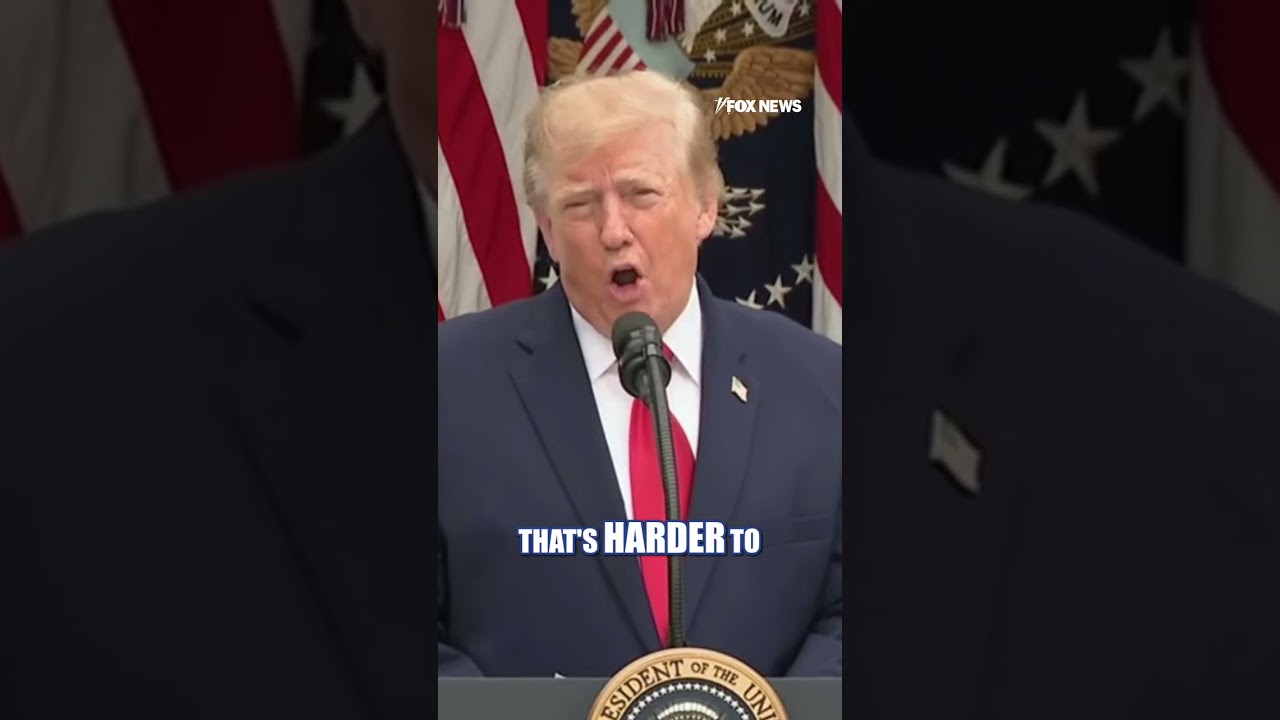
Trump had another go this week, finding multiple ways to declare that in the war between Russia and Ukraine, he is no mediator or peace broker but a partner of Vladimir Putin. In fairness to him, the US president had loudly issued that declaration within weeks of his return to the White House when, in February 2025, he delivered an on-camera dressing down of Volodymyr Zelenskyy in the Oval Office, seeking to humiliate the Ukrainian leader by telling him “you don’t have the cards”, even as JD Vance demanded their visitor show gratitude. That should have made Trump’s position sufficiently plain, but in the past few days he has all but put it up in lights.
Earlier this week Ukrainian forces found that an essential piece of kit – a version of Elon Musk’s Starlink system used by Kyiv to guide its drones – was no longer working at speeds greater than 100mph. That meant not only a sudden shrinking of Ukraine’s ability to strike behind the frontlines, but also the hobbling of an air defence system vital in protecting the capital from Russian jet-propelled drones. This was no technical hitch. Starshield, the military-grade version of Starlink, is owned and controlled by the US government – and, as Reuters reported, the order to limit its use in Ukraine came from the White House. Put simply, Trump actively intervened in the war to weaken Ukraine’s ability to defend itself. “The decision will bring a lot of human losses,” Zelenskyy told Piers Morgan. “Of course, people will die.”
Trump’s move was hardly a bolt from the blue. This same week, Ukraine endured at least two nights of Russian bombardment without the usual advance warnings from the US of when or where Moscow was about to strike. Trump denied that he had broken off long-established intelligence sharing with Kyiv, but that’s exactly what it looked like.
All this followed the US president’s decision to break the international sanctions regime on Moscow, by agreeing to buy $4bn worth of Russian diesel oil. That volume will barely make a splash in the US market, where high diesel prices are imperilling the Republicans’ midterm chances in several rural states that rely on the stuff, but it will come as a welcome cash infusion for Putin’s war machine. Just as Russia’s military position was looking precarious, Donald Trump has come riding to the rescue. Throw in the US invitation to Putin to attend December’s G20 meeting at one of Trump’s golf clubs in Florida, and you have a US president who might as well be skywriting his support for Russia and his betrayal of Ukraine.
In Trump’s first term, much energy was spent trying to work out what dark secret lay behind this apparent affinity with Moscow. I tend to the view advanced by my expert colleague Luke Harding, who, when asked if Trump is a tool of the Russian intelligence services, answers with a question of his own: if Trump were a Russian asset, in what way would he behave any differently from the way he behaves now?
Whatever the motive, or whether, as Harding suggests, it’s some combination of greed, ideology, dictator envy and kompromat, the facts are unarguable. The most powerful member of the western alliance is, at best, an unreliable partner and, at worst, in league with the alliance’s chief enemy. Why this matters should not need spelling out, least of all in the week when the head of MI5 described Russia as “aggressor number one”. For years now, the Kremlin has demonstrated its willingness to attack Nato member states, usually in the form of hybrid or “grey zone” operations that are not overt acts of war but come instead with a patina of deniability. One study found that there have been than no fewer than “151 confirmed Russian-directed industrial sabotage incidents in Europe between February 2022 and February 2026”, while last weekend brought credible reports of a Russian intention to assassinate executives of key European defence firms.
What should the US’s erstwhile allies do about this new reality? The first task is to keep supporting Ukraine, all the more energetically given that Washington has, in effect, switched sides. The second is to avoid an error that is looming. The midterm elections, which are little more than a fortnight away, are expected to deliver big gains for the Democrats and a big blow to Trump. If Democrats retake one or both houses of Congress, plenty of European leaders will be tempted to exhale deeply, conclude that the orange storm has passed and that normal transatlantic service is about to resume. That would be a grave mistake.
For one thing, while the US president has been unbound by congressional restraint for most of the past two years, it’s not certain that a constrained Trump will be a tamed Trump. On the contrary, one Washington hand warns that he could become a “cornered animal”, even more extreme in the area where a president is freest to act, namely foreign affairs. Of course, Trump will be gone eventually, but there too lies the danger of false comfort. “This shift is permanent,” one former UK cabinet minister tells me. If nothing else, Trump has proved that Trump and Trumpism can happen: now we know that the western alliance is neither guaranteed nor unshakeable, but vulnerable to a change in the US political weather.
All of this means we are living in a newly dangerous world. Witness the richly reported new book War is Interested in You by Gideon Rachman, which lays bare quite how seriously leading policymakers rate the risk of a third world war. It’s an age in which we can no longer rely on others to defend us. The chilling lesson of the Starlink episode for those who depend on US hardware or software is that the US always retains an off switch. In other words, Britain and the rest of Europe have to be able to defend ourselves, with our own armies and our own arms.
after newsletter promotion
The best time for governments to have made this case was the night of that shocking Oval Office scene with Zelenskyy last year. But the second-best time is now. When John Healey delivers his first budget on 28 October, this is the argument he needs to set out. As a former defence secretary, he is especially well placed to do it. The Labour manifesto of 2024 was written before Trump was re-elected, before anyone knew that in the great clash of our time the US was about to align itself with authoritarianism against democracy. Things have changed and that document can no longer be treated as holy writ. We will have to spend whatever it takes to protect ourselves in a changed and perilous world. Trump is telling us that in a crude, loud voice. We must listen.
-
Jonathan Freedland is a Guardian columnist
-
US midterms: Trump, war and America’s future
On Thursday, 5 November join Jonathan Freedland, Devika Bhat, Professor Adam Smith in London and David Smith and leading US commentator Tara Setmayer live from the US to discuss the results and their implications for the future of Trump, the US and global politics.
Book tickets here or at guardian.live









Comments